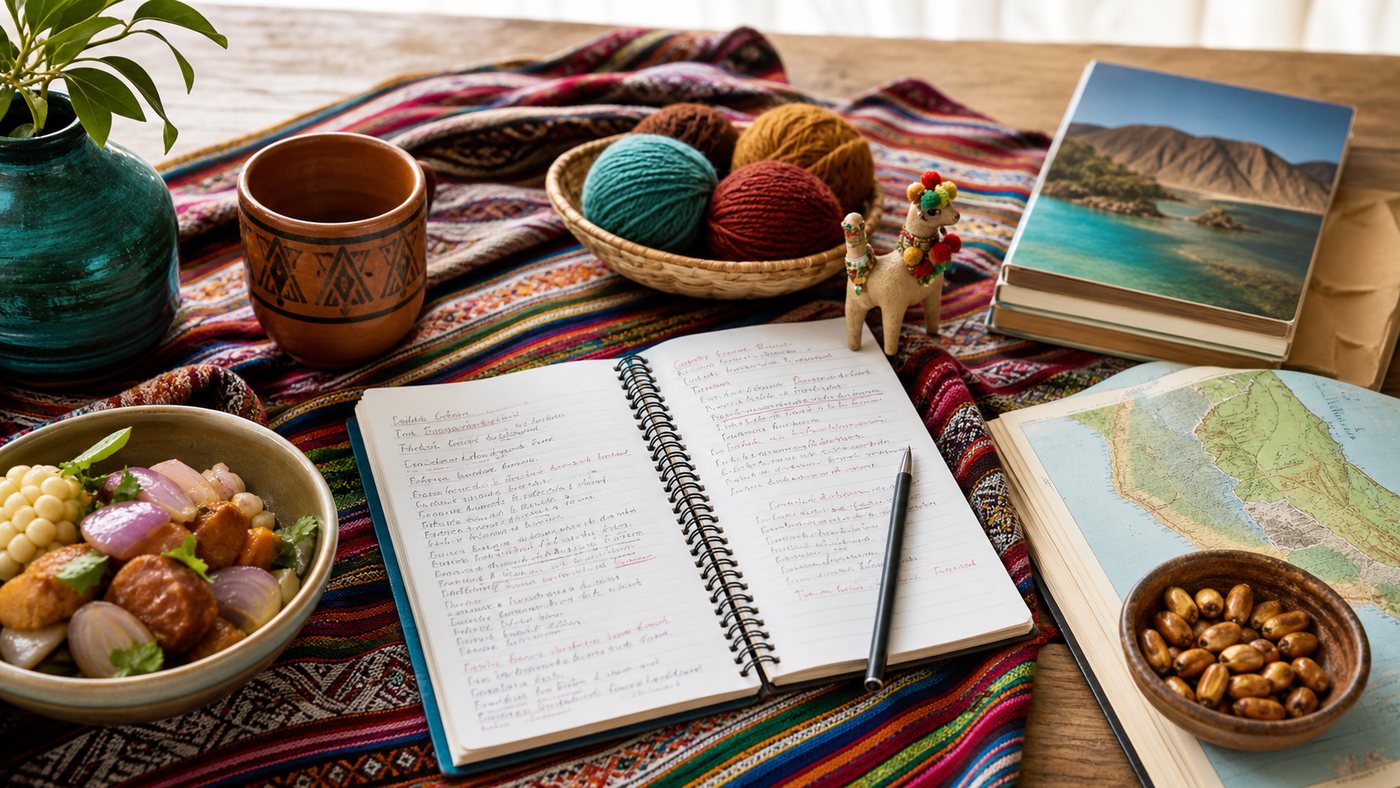
Spanish becomes easier to remember when it is attached to a place, a person, and a real moment. Peruvian culture gives students a rich path into the language because it combines warmth, food, regional variety, history, music, humor, and everyday politeness.
If you study Spanish only as grammar, you may understand the structure but miss the feeling. If you study it through culture, the language starts to sound less like a school subject and more like a living way to connect.
Why Peru is a powerful classroom
Peru is not one single accent or one single cultural style. Lima, Cusco, Arequipa, the Amazon region, the coast, the Andes, and immigrant communities all add different sounds and habits. That variety helps students understand that Spanish is flexible.
Culture gives vocabulary a memory
It is easier to remember ceviche, mercado, familia, receta, and bienvenido when they belong to a real scene. A dish, a market, or a family lunch gives the words emotional weight.
Peruvian Spanish trains politeness
Peruvian conversations often value warmth and respect. Students can practice phrases like por favor, disculpe, con permiso, muchas gracias, and que amable in realistic social moments.
Start with food conversations
Food is one of the best entry points because it is practical and cultural at the same time. You can learn ingredients, preferences, recommendations, compliments, and questions without needing advanced grammar.
Useful restaurant scenes
- Ask what a dish includes.
- Say you have never tried something before.
- Ask for a recommendation.
- Compliment the flavor politely.
- Explain what you liked and why.
A simple practice frame
Use this pattern: "I have heard about this dish. What does it have? Is it spicy? What do you recommend for someone trying it for the first time?" That small frame can become a full conversation.
Learn greetings as social tools
Greetings are not filler. They show tone, respect, and interest. Instead of memorizing only hola, practice the full social sequence: greeting, name, origin, reason for learning Spanish, and a friendly follow-up question.
From sentence to connection
"I am learning Spanish" is useful. "I am learning Spanish because I want to understand Peruvian culture better" is stronger. It tells the other person your intention and opens a natural next question.
Use culture to ask better questions
Students often run out of Spanish because they only prepare answers. Culture helps you prepare questions. Questions keep conversations alive.
Questions that invite stories
- What food reminds you of home?
- What place in Peru should visitors understand better?
- What expression do Peruvians use a lot?
- What tradition do you enjoy most?
A weekly practice plan
Choose one cultural topic per week: food, music, places, family traditions, or everyday expressions. Learn ten words, five questions, and one short personal opinion. Then practice a two-minute conversation around that topic.
Keep the goal human
The goal is not to become an expert in one week. The goal is to have a better conversation than you had before. Culture gives you something meaningful to say, and Spanish gives you the bridge to say it.
Want Spanish with culture, not just grammar?
LingSpeak can help you build Spanish lessons around Peruvian culture, practical conversation, and your real interests.
Explore Peruvian Spanish